
Overview
| What is it | Acne that persists or repeatedly returns. |
| Common causes | Excess oil, clogged pores, inflammation and hormonal changes. |
| When to see a doctor | Persistent, painful or scarring acne. |
| Treatment options | Topical and oral medications, and selected in-clinic procedures. |
| Expected results | Initial improvement in 6–8 weeks, with further progress over several months. |
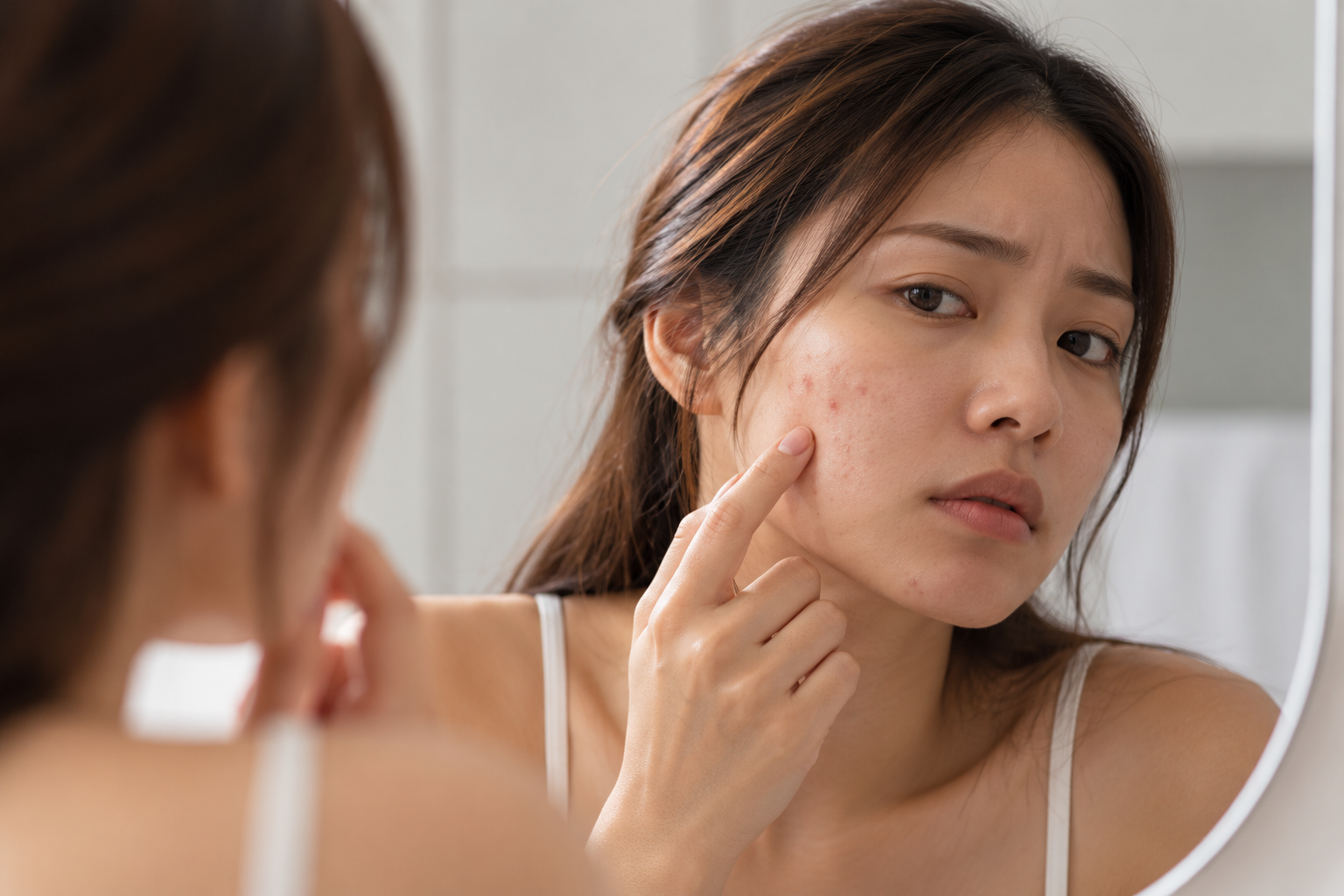
Dealing with acne can be frustrating, especially when one breakout clears up only for another to appear. You might have tried different skincare products, changed your routine or followed every piece of advice you've come across, yet your skin still isn't improving.
While occasional breakouts are common, acne that persists or keeps returning can be harder to manage without medical treatment. Some forms of acne also carry a greater risk of leaving dark marks or permanent scars.
So, how do you know when it's time to stop experimenting with skincare and see a doctor? In this article, we look at why acne keeps coming back, the signs that warrant medical attention and the treatment options available.
Persistent acne refers to breakouts that continue over time or repeatedly return, even with regular skincare or acne treatment. It can begin during adolescence and carry on into adulthood, or develop for the first time later in life.
Acne develops when excess oil (sebum) and dead skin cells accumulate inside hair follicles. This can lead to clogged pores, bacterial activity and inflammation, resulting in different types of acne lesions.
Rather than a single pimple that refuses to heal, persistent acne often involves new spots appearing while older ones are still clearing.
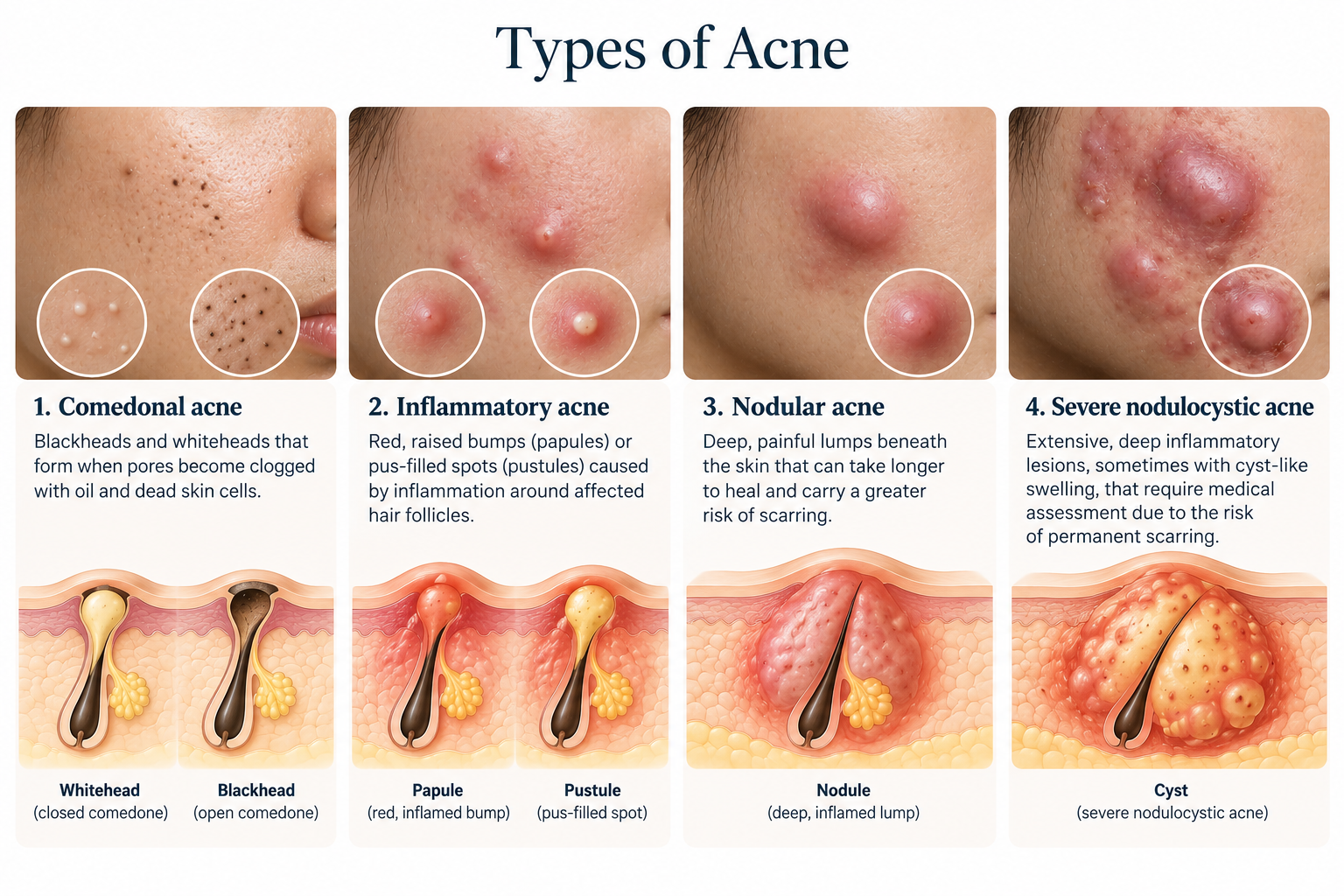
Acne can take several forms, and identifying the type is important because not all breakouts respond to the same treatment.
The distinction matters. While mild comedonal acne can often be managed with topical treatments, deeper inflammatory acne generally requires a different approach.
Even after existing pimples heal, the factors contributing to acne can remain active. Hormonal changes, genetics and certain external triggers can all influence how frequently new breakouts develop.
| Excess sebum production | Overactive oil glands produce more sebum, which can accumulate inside pores and contribute to blockages. |
| Blocked hair follicles | Dead skin cells do not shed normally, allowing them to build up with sebum and form blackheads or whiteheads. |
| Bacterial activity and inflammation | Cutibacterium acnes, a bacterium naturally present on the skin, can contribute to inflammation within affected follicles. |
| Hormonal changes | Fluctuations in androgen activity can increase oil production, contributing to breakouts during puberty, menstruation or adulthood. |
| Genetic predisposition | Having family members with acne can increase your likelihood of developing persistent breakouts. |
| Skincare and external triggers | Certain cosmetics, oily hair products and prolonged friction from masks or helmets can aggravate acne-prone skin. |
Singapore's hot and humid climate can also make acne management more challenging for some people, especially when sweat and prolonged skin occlusion contribute to irritation.
However, recurring acne rarely has just one cause. Understanding which factors are contributing to your breakouts can help guide a more appropriate treatment approach.
It can be discouraging to invest time and money in skincare products without seeing much improvement. However, persistent breakouts don't always mean that nothing works for your skin. Sometimes, the treatment simply isn't suitable for the type or severity of acne you have.
Several factors can affect how well acne responds to treatment:
If you've been following a consistent routine without meaningful improvement, it may be worth having your skin assessed rather than continuing to experiment with new products.
Not every breakout requires medical treatment. However, if your acne keeps returning, becomes painful or starts leaving marks, it may be time to seek professional advice.
Here are five signs that warrant a medical assessment.
Mild acne often responds to over-the-counter products containing ingredients such as benzoyl peroxide or salicylic acid. If you've been using suitable products consistently without seeing improvement, prescription treatment may be necessary.
You don't have to wait until your acne becomes severe to see a doctor.
Large, tender lumps beneath the skin can indicate nodular or severe inflammatory acne. Unlike superficial pimples, these lesions involve deeper layers of the skin and often take longer to heal.
Seeking treatment early can help control inflammation and reduce the risk of permanent scarring.
Some breakouts leave behind flat red or dark marks that gradually fade. Others cause permanent changes to the skin's texture, such as depressed or raised scars.
Watch for small indentations, uneven skin texture or recurring deep lesions, especially in areas where previous breakouts have already left scars.
Acne doesn't always disappear after adolescence. Some adults continue experiencing breakouts well into their 30s and 40s, while others develop acne for the first time later in life.
In women, recurring breakouts may be influenced by hormonal changes. Acne accompanied by irregular periods, increased facial hair or scalp hair thinning can also warrant investigation for conditions such as polycystic ovary syndrome (PCOS).
Acne can take an emotional toll, regardless of how mild or severe it appears. You might find yourself avoiding photographs, feeling self-conscious in social situations or becoming increasingly frustrated with your skin.
These concerns are just as valid as the physical symptoms. If acne is affecting your wellbeing, seeking medical advice is a reasonable step.
When to seek prompt medical attention: Rapidly worsening acne, extensive painful nodules, or new scarring should be assessed without delay. Acne accompanied by fever, spreading redness, significant swelling or joint pain requires more urgent evaluation.
Acne treatment isn't one-size-fits-all. What works for occasional whiteheads may not be enough for persistent inflammatory acne or deep, painful breakouts.
A doctor will assess your acne type, severity and response to previous treatments before recommending an appropriate approach. Treatment options include:
Prescription creams and gels are commonly used for mild to moderate acne.
For more persistent or severe breakouts, oral medications can help control acne that has not responded adequately to topical treatment.
Related reading: Hormonal Acne vs. Regular Acne: What’s The Difference?
In-clinic acne treatments
APAX Medical & Aesthetic Clinic also provides procedures that can complement medical treatment for selected patients.
| Treatment | How it helps |
| ADVATx Laser | Uses specific wavelengths of light to target inflammation associated with active acne and reduce post-acne redness. |
| Carbon Laser Peel | Helps exfoliate dead skin cells, manage excess oil and clear clogged pores. |
| Intralesional Corticosteroid Injections | Reduce swelling and tenderness in selected large, painful acne nodules. |
| Acne Cyst Drainage | Relieves discomfort from selected large, pus-filled lesions when drainage is clinically appropriate. |
Acne treatment takes time, and improvements are usually gradual. Most patients begin noticing fewer breakouts and reduced inflammation after 6–8 weeks, although it can take around 3–6 months to see more substantial changes, especially with moderate to severe acne.
Consistency is important throughout this period. Even when your skin starts clearing, continuing the prescribed treatment helps prevent new breakouts. Your doctor will also monitor your progress and adjust your treatment if necessary.
Related reading: Case Study: Resolving Persistent Cystic Acne in a 28-year-old Male
Once active acne is adequately controlled, you can begin addressing any scars left behind by previous breakouts. Unlike temporary red or dark marks, depressed acne scars involve changes to the skin's underlying structure and generally require different treatments.
Medical acne scar treatment options such as TCA CROSS, subcision, INFINI RF microneedling and fractional laser resurfacing can help improve the appearance of different acne scar types. Your doctor can assess your scarring and recommend an appropriate treatment approach.
Related reading: Red Marks, Dark Marks or Scars? Treatment Options for Each
Acne doesn't have to be a lifelong struggle. With advances in medical treatments and laser technology, persistent breakouts can be managed more effectively, helping patients achieve clearer skin and reduce the risk of permanent scarring.
If you've been struggling with acne that keeps coming back, you don't have to keep experimenting with skincare products on your own. At APAX Medical & Aesthetic Clinic, our doctors can assess your skin, identify factors contributing to your breakouts and recommend a treatment plan suited to your needs.
Book a consultation to explore your acne treatment options and take the next step towards healthier, clearer skin.
Recurring acne in the same area can be caused by persistent clogged pores, hormonal influences or repeated friction and irritation. Breakouts around the chin and jawline, for example, are sometimes associated with hormonal fluctuations. If the same area repeatedly develops deep, painful pimples, a medical assessment can help identify the cause.
Not necessarily. Hormones influence oil production, but persistent acne doesn't automatically indicate a hormonal disorder. Your doctor can run additional tests to rule out the possibility of hormone-related issues.
Yes. Stress can influence hormonal and inflammatory processes that aggravate existing acne. Although stress alone isn't usually the underlying cause, managing it alongside a consistent skincare routine and appropriate treatment can help support acne control.
Not necessarily. Some patients achieve sustained improvement after a course of treatment, while others benefit from ongoing maintenance therapy to prevent recurring breakouts. Your doctor can review your progress and recommend when to reduce, continue or stop treatment.


Dr. Moses Ng is a distinguished professional in the field of aesthetic medicine, renowned for his expertise in advanced cosmetic procedures. With over 15 years of experience, extensive training and a keen eye for detail, Dr. Ng specializes in a wide range of treatments, including injectables, laser therapies, and acne scar management.
Dr. Moses Ng’s commitment to excellence and patient-centric approach have earned him a reputation as a trusted clinician in aesthetic medicine. His continuous pursuit of the latest advancements in the field ensures that his patients receive the highest standard of care and the most effective treatments available.


