
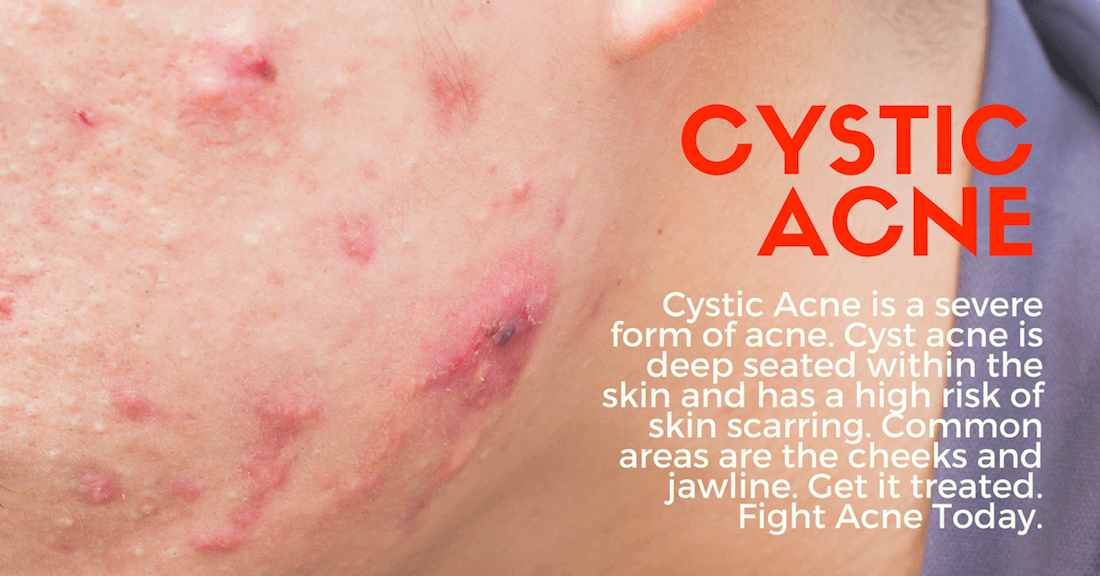
Cystic acne is a severe form of acne characterised by deep, inflamed cysts or nodules beneath the skin’s surface. Unlike ordinary pimples, these cysts develop from blocked pores and bacterial infection that trigger intense inflammation. They are often painful to touch, can last for weeks or months, and have a high risk of leaving permanent scars if not treated properly. Because cystic acne penetrates deeper into the skin, it requires timely medical attention to prevent complications and preserve skin health.

Cystic acne develops when hair follicles become clogged with oil, dead skin cells, and bacteria, leading to a deep infection under the skin. Several factors can increase the likelihood of developing this condition:

Cystic acne can present as large, painful lumps most commonly on the face, jawline, chest, back, or shoulders. These lesions can range from small microcysts to large nodules several centimetres in size, making early treatment important to relieve pain, minimise scarring, and restore skin confidence.
Cystic acne develops much deeper in the skin compared to milder forms of acne, which is why over-the-counter products, medicated creams, and superficial treatments like chemical peels are often ineffective. Because the inflammation occurs in the lower layers of the skin, cystic acne is usually more painful, lasts longer, and carries a much higher risk of permanent scarring if left untreated.
Unlike whiteheads or blackheads that may resolve quickly, cystic acne lesions are not “poppable.” They tend to cause significant swelling, tenderness, and emotional distress due to their severity and visibility.
Recognising the difference between cystic acne and milder types of acne is important, as early medical treatment can reduce pain, limit scarring, and prevent long-term damage to the skin.
| Type | Acne Cyst | Acne Nodule | Papules/Pustules | Comedones |
| Description | Deep, painful, pus-filled lesions | Large, solid, painful lumps | Small raised red or pus-filled bumps | Blackheads or skin-coloured bumps |
| Inflammation | High | High | Moderate | Minimal/none |
| Scarring | High | High | Moderate | Minimal |
| Size | >0.5 cm | >1 cm | Small | Small |
| Pain | Significant | Significant | Mild to moderate | None |
Because of its severity, cystic acne should not be managed with home remedies alone. Specialist treatment is essential to control inflammation, protect the skin, and minimise permanent scarring.
Cystic acne is a severe form of inflammatory acne that presents as painful, swollen bumps under the skin. These lesions appear red, feel tender to touch, and may release pus when they rupture. Unlike common pimples that form closer to the skin’s surface, cystic acne develops deeper within the dermal layers, making it more persistent and more likely to scar.
The key distinction between cystic acne and nodular acne is the presence of pus. Nodular acne is deeply embedded, hard, and painful but does not typically produce pus. In contrast, cystic acne often leads to inflamed pus-filled lesions. Some individuals also develop nodulocystic acne, which is a combination of both nodular and cystic acne.
Features that suggest cystic or nodulocystic acne include:
Because cystic acne can cause scarring and emotional distress, recognising these features early and seeking specialist care is crucial for effective management.
Nodulo-cystic acne forms when multiple factors combine to trigger deep inflammation within the skin. These include excess oil, clogged pores, bacterial activity, and an exaggerated immune response.
Key causes include:
Because nodulo-cystic acne develops so deeply within the dermis, it is more severe than common acne and requires timely medical treatment to reduce the risk of permanent scarring.
While cystic acne cannot always be fully prevented, adopting the right skin care habits and lifestyle choices can reduce flare-ups and lower the risk of scarring. Early treatment is also important to keep the condition under control.
Tips to help minimise cystic acne include:
Maintaining a gentle skincare routine and making mindful product choices can make a noticeable difference. For persistent or severe acne, medical treatment is essential to prevent long-term damage.

Managing acne effectively requires a tailored approach, as no two patients experience the condition in the same way. At our clinic, we design acne treatment plans that are practical, sustainable, and suited to your lifestyle. This not only improves treatment success but also helps prevent relapses and long-term scarring.
Factors we consider when customising your acne care include:
By considering these factors, we create a treatment plan that is personalised, effective, and focused on achieving clearer, healthier skin over the long term.
Treatment for cystic acne depends on the severity of the condition, medical history, skin type, and individual response. Both procedural and medical treatments are available to reduce inflammation, relieve pain, and prevent long-term scarring.
With timely treatment, cystic acne can be managed effectively, reducing pain and minimising the risk of permanent scarring.

With more than 15 years of clinical experience, Dr. Ng understands the significant physical and emotional impact cystic acne can have on patients. Acne affects both men and women across all age groups and can persist for months or even years without proper treatment.
Dr. Ng adopts a patient-centred approach that combines scientific evidence with his extensive clinical expertise. Each treatment plan is carefully tailored to the individual’s skin type, acne severity, and lifestyle, as it helps ensure the best possible outcomes. By addressing both active breakouts and the risk of future scarring, Dr. Ng focuses on restoring clear, healthy skin and improving long-term confidence.
Early intervention is key. Seeking timely treatment with Dr. Ng can help prevent permanent scarring, reduce relapses, and support lasting improvements in skin health.
At APAX Medical, the cost of cystic acne treatment varies depending on the type of therapy, the severity of the condition, and the individual needs of each patient. We provide transparent pricing so you know what to expect before starting your treatment plan. Below are the starting prices for common cystic acne treatments:
| Treatment | Price |
| Oral Antibiotics | from $30 |
| Topical Retinoid | from $40 |
| Oral Isotretinoin | from $80 |
| Injection Steroids | from $120 |
| Drainage of Cyst | from $150 |
| Laser Acne Treatment | from $399 |
Cystic acne is a severe form of acne that develops deep within the skin, causing painful, swollen lesions that often persist for weeks or months. Unlike milder acne, it carries a high risk of scarring and typically does not respond to over-the-counter treatments. Factors such as genetics, hormonal changes, lifestyle, and bacterial overgrowth can all contribute to its development. Recognising cystic acne early is important, as it differs from nodules, pustules, and comedones in severity, pain, and long-term effects.
Management involves a personalised approach that may include skincare adjustments, lifestyle modifications, and medical treatments. Options range from intralesional injections and cyst drainage to prescription therapies such as topical retinoids, oral antibiotics, and oral isotretinoin. With professional care, most patients achieve significant improvement, reduced recurrence, and prevention of permanent scarring.
If you are struggling with persistent, painful acne or are concerned about scarring, schedule a consultation with APAX Medical for in-depth diagnosis, personalised care, and effective treatment tailored to your skin needs.
It is caused by a combination of excess oil production, clogged pores, bacterial overgrowth, hormonal changes, and an exaggerated inflammatory response.
No. Nodular acne consists of deep, hard, painful lumps without pus, while cystic acne usually contains pus and is more inflamed.
Teenagers, young adults, people with a family history of severe acne, those with oily skin, and individuals with hormonal imbalances are more at risk.
While diet is not the sole cause, high-glycaemic foods (sugary snacks, white bread, glutinous rice) and dairy may trigger or worsen breakouts in some individuals.
Stress does not directly cause acne, but it can worsen inflammation and hormonal fluctuations, increasing the risk of flare-ups.
Milder cases may improve, but severe cystic acne often persists and can cause permanent scarring without medical treatment.
Yes. Because it forms deep within the skin, cystic acne frequently leads to pitted scars, dark marks, or even keloids if not treated early.
Treatment varies but may include intralesional steroid injections, topical retinoids, oral antibiotics, oral isotretinoin, drainage of cysts, or laser therapy.
Yes, but they are only prescribed under strict medical supervision due to potential side effects. Most patients see more than 90% improvement after treatment.
No. OTC creams and face washes are usually ineffective for cystic acne, as the inflammation occurs deep in the dermis.
Treatment duration depends on severity, but significant improvement is often seen within a few weeks to months with consistent therapy.
Yes, flare-ups can recur, especially if the underlying hormonal or lifestyle factors remain unmanaged. Long-term care helps reduce recurrence.
It may lead to chronic pain, emotional distress, permanent scarring, and dark pigmentation marks.
Yes. Hormonal imbalances in polycystic ovary syndrome (PCOS) often trigger cystic acne around the jawline, chin, and neck.
Adopt a gentle skincare routine, avoid pore-clogging products, wash your face after sweating, manage stress, and reduce high-glycaemic foods and dairy.
If you experience painful, persistent, or recurrent acne that leaves scars, consult a specialist for personalised treatment.


Dr. Moses Ng is a distinguished professional in the field of aesthetic medicine, renowned for his expertise in advanced cosmetic procedures. With over 15 years of experience, extensive training and a keen eye for detail, Dr. Ng specializes in a wide range of treatments, including injectables, laser therapies, and acne scar management.
Dr. Moses Ng’s commitment to excellence and patient-centric approach have earned him a reputation as a trusted clinician in aesthetic medicine. His continuous pursuit of the latest advancements in the field ensures that his patients receive the highest standard of care and the most effective treatments available.


