

Freckles, sun spots and dark spots can make the skin appear uneven, dull or sun-damaged, especially when pigmentation becomes more noticeable with age or repeated sun exposure.
At APAX Medical & Aesthetics Clinic, we provide personalised pigmentation assessment and treatment for freckles, lentigines and dark spots. Depending on your skin type and pigmentation pattern, treatment may involve Pico laser, medical-grade skincare or a combination approach to help reduce visible pigmentation and restore a clearer, more even-looking complexion.


Freckles and dark spots are common forms of skin pigmentation that develop when excess melanin accumulates in certain areas of the skin. While both conditions are generally harmless, they can become more noticeable with age, sun exposure and certain genetic factors, leading to an uneven skin tone or complexion.
Freckles often appear during childhood and tend to darken with sun exposure [1], whereas dark spots commonly develop later in life as a result of cumulative sun damage. Although they may appear similar, different types of pigmentation can require different treatment approaches, making an accurate diagnosis important.
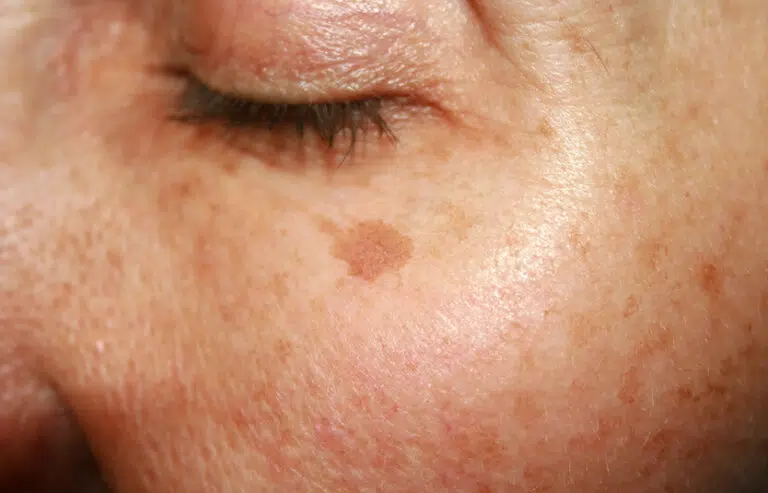
Several pigmentation conditions can appear similar to freckles or dark spots. Understanding the differences helps guide appropriate treatment and management.
| Condition | Appearance | Common Cause | Typical Behaviour |
| Freckles (Ephelides) | Small, light to dark brown spots | Genetics and sun exposure | Often darken during sunny periods and fade when sun exposure decreases |
| Solar Lentigines (Sun Spots/Age Spots) | Well-defined brown patches or spots | Cumulative sun damage | Usually persist without treatment and become more common with age |
| Melasma | Larger symmetrical brown or grey-brown patches | Hormonal factors, genetics and sun exposure | Commonly affects the cheeks, forehead and upper lip |
| Post-Inflammatory Hyperpigmentation (PIH) | Flat dark patches left after skin inflammation or injury | Acne, eczema, trauma or procedures | May gradually fade over time but can persist for months |
| Seborrhoeic Keratoses | Raised, rough or waxy brown growths | Age-related skin changes | Benign lesions that do not typically resolve spontaneously |
Freckles and dark spots develop when pigment-producing cells in the skin produce excess melanin. While sun exposure is one of the most significant contributing factors, several other factors can also influence pigmentation.
Common causes include:

Most freckles and dark spots are harmless. However, some pigmented lesions may require medical evaluation to rule out more serious skin conditions.
You should consider seeking medical advice if a dark spot:
A professional assessment can help determine whether a lesion is a benign pigmentation concern or requires further investigation and treatment.
Freckles and dark spots are usually diagnosed through a clinical assessment of the skin. Because different pigmentation conditions can appear similar, an accurate diagnosis is important to determine the most appropriate treatment approach and exclude lesions that may require further medical evaluation.
During the consultation, our doctor may assess:
Treatment for freckles and dark spots depends on the type of pigmentation, its depth within the skin and individual skin characteristics. While some forms of pigmentation may respond well to a single treatment modality, others may benefit from a combination approach.
Following a comprehensive assessment, Dr. Ng will recommend a personalised treatment plan based on your skin type, pigmentation pattern and treatment goals.
Treatment options may include:
Pico laser treatment is one of the most commonly used options for the treatment of freckles, sun spots and other forms of benign pigmentation [8]. The laser delivers ultra-short pulses of energy that break down excess pigment into smaller particles, allowing the body’s natural processes to gradually clear the pigment over time [9].
Compared to older laser technologies, Pico lasers can target pigmentation with greater precision while minimising heat-related damage to surrounding skin. This makes the treatment suitable for a wide range of skin types and pigmentation concerns.
Depending on the type of pigmentation being treated, Pico laser treatment may be used alone or combined with topical therapies as part of a comprehensive pigmentation management plan.
The number of Pico laser sessions required varies depending on the type, depth and extent of pigmentation being treated.
Treatment sessions are typically spaced several weeks apart to allow the skin to heal and pigment particles to be naturally cleared by the body.
The goal of treatment is to reduce visible pigmentation and achieve a clearer, more even skin tone. Most patients notice gradual improvement as pigmentation becomes lighter and less noticeable over time.
Potential results may include:
Results vary between individuals, and ongoing sun protection remains essential to maintain improvements and reduce the risk of new pigmentation developing in the future.
Freckles and dark spots are common forms of pigmentation that can develop due to genetics, ageing, sun exposure and other factors that stimulate excess melanin production in the skin. Although these pigmentation concerns are generally harmless, they can become more noticeable over time and contribute to an uneven skin tone or complexion.
Because different types of pigmentation can appear similar, a professional assessment is important to determine the underlying cause and identify the most appropriate treatment approach.
A range of treatment options is available for freckles and dark spots, including Pico laser treatment, medical-grade topical therapies and combination treatment plans tailored to individual skin needs. With appropriate treatment and ongoing sun protection, many individuals can achieve a clearer, brighter and more even complexion.
If you are concerned about freckles, sun spots or other forms of facial pigmentation, schedule a consultation with APAX Medical & Aesthetics Clinic for a personalised assessment and treatment plan.
No. Freckles are usually small pigmented spots that often develop due to genetics and sun exposure, while dark spots commonly refer to solar lentigines or other forms of pigmentation that develop over time as a result of cumulative sun damage.
Treated pigmentation may improve significantly, but new pigmentation can develop with ongoing sun exposure and ageing. Consistent sun protection is important to help maintain treatment results.
Most individuals tolerate Pico laser treatment well. Some patients describe the sensation as mild snapping or tingling on the skin, and discomfort is generally minimal and short-lived.
Downtime varies depending on the treatment performed. Mild redness, darkening of pigmentation or slight skin sensitivity may occur temporarily following laser treatment, but most individuals can return to normal activities shortly afterwards.
While not all pigmentation can be prevented, daily use of sunscreen, protective clothing and sun avoidance during peak UV hours can help reduce the risk of developing new pigmentation.
Yes. Pigmentation can also develop on other sun-exposed areas such as the neck, chest, shoulders, arms and hands.
Some over-the-counter products may help brighten the skin, but they are often less effective than prescription-strength treatments or laser procedures for established pigmentation.
Many pigmentation treatments, including Pico laser technology, can be customised for different skin types. A consultation is recommended to determine the safest and most effective treatment approach for your skin.


Dr. Moses Ng is a distinguished professional in the field of aesthetic medicine, renowned for his expertise in advanced cosmetic procedures. With over 15 years of experience, extensive training and a keen eye for detail, Dr. Ng specializes in a wide range of treatments, including injectables, laser therapies, and acne scar management.
Dr. Moses Ng’s commitment to excellence and patient-centric approach have earned him a reputation as a trusted clinician in aesthetic medicine. His continuous pursuit of the latest advancements in the field ensures that his patients receive the highest standard of care and the most effective treatments available.


