
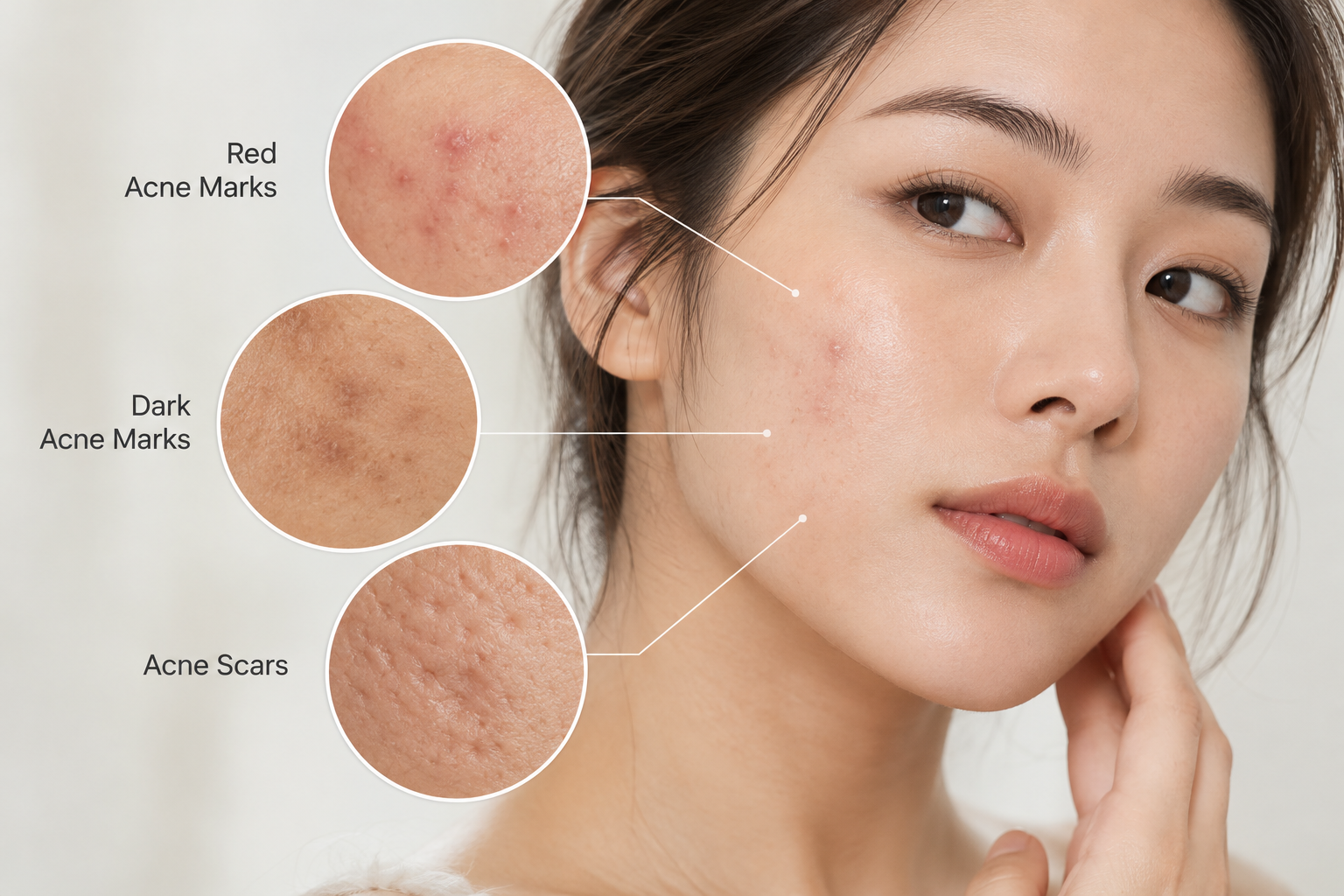
Acne doesn't always end when the last pimple disappears. Even after breakouts settle, you might notice lingering red patches, brown spots or uneven skin texture. These changes are often grouped together as acne scars, although they don't all involve permanent damage to the skin.
Red marks, dark marks and true acne scars develop differently, which means they also require different treatment approaches. Some fade naturally over time, while others persist without targeted treatment.
So, how can you tell what you're dealing with? In this article, we explain the differences between post-acne marks and scars, which treatments can help and when to consider seeking medical advice.
When an inflamed pimple heals, the skin begins repairing the affected tissue. Depending on the depth of inflammation and how the skin responds, this process can leave behind changes in colour, texture or both.
There are three main ways this happens:
These changes can also occur together. For example, a person may have dark marks alongside depressed acne scars in the same area.
The easiest way to tell acne marks apart from true scars is to look at the skin's texture. Red and dark marks generally affect skin colour without changing its surface, while acne scars cause visible depressions, raised areas or uneven texture.
| Feature | Red Marks (PIE) | Dark Marks (PIH) | Acne Scars |
| Appearance | Pink, red or purplish | Brown or grey-brown | Pitted, depressed or raised |
| Underlying change | Blood vessel changes | Excess melanin | Structural tissue damage |
| Skin texture | Flat and unchanged | Flat and unchanged | Uneven or raised |
| Natural healing | Often fades gradually | Can take months or longer | Usually persists |
| Treatment focus | Reducing redness | Fading pigmentation | Improving skin contour |
A flat acne mark can sometimes look more noticeable than a shallow scar, but this doesn't necessarily mean the skin has sustained deeper damage.
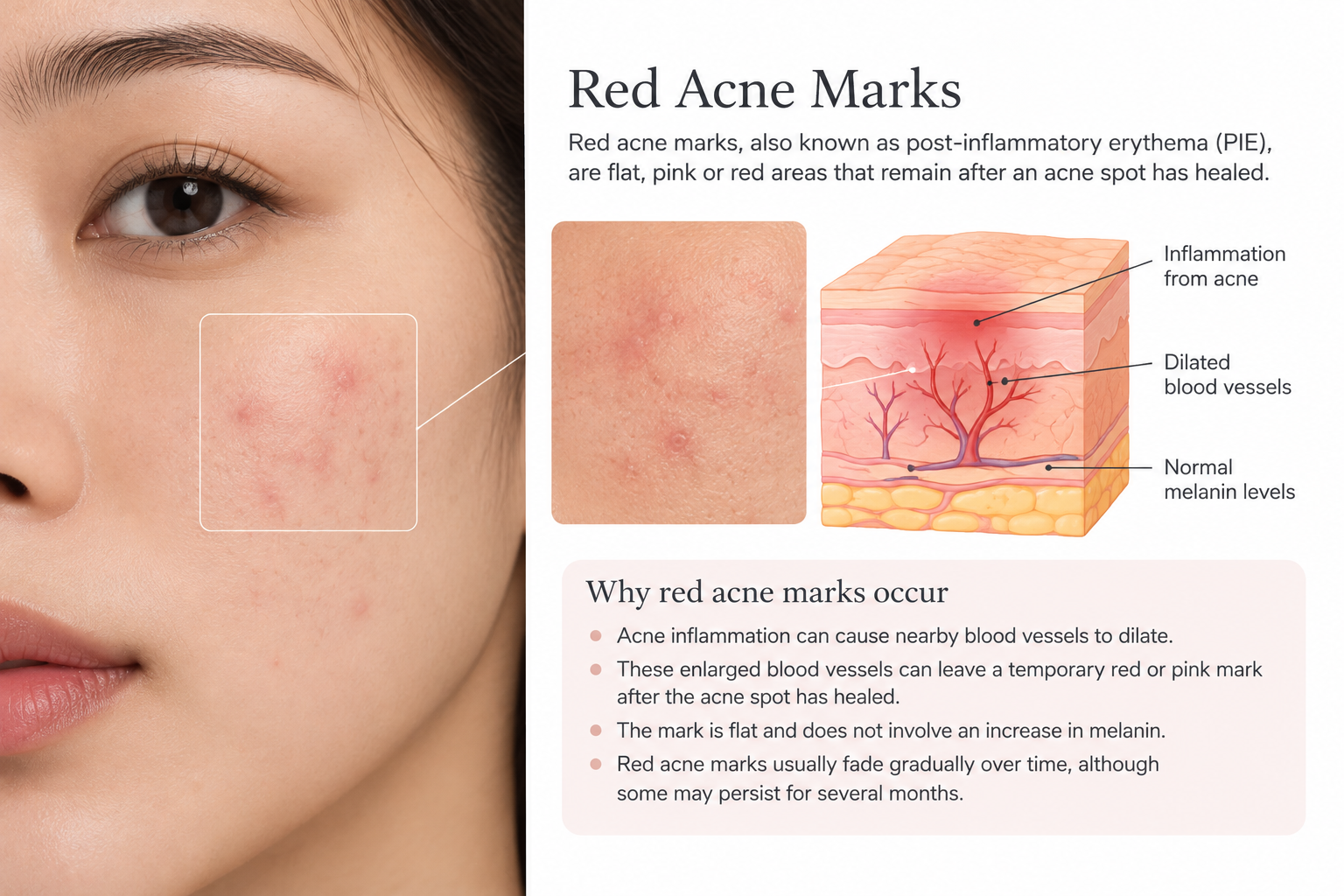
Post-inflammatory erythema (PIE) refers to the pink, red or purplish marks that remain after inflamed acne has healed. Unlike true acne scars, these marks are flat and do not change the skin's surface texture.
Red acne marks are often more noticeable in lighter skin tones, although they can occur in darker skin as well. Some fade within weeks or months, while others persist for longer, especially when new breakouts continue to develop.
Many red acne marks gradually fade as the skin recovers. For persistent redness, APAX Medical & Aesthetic Clinic offers several treatment options depending on the skin's condition and whether active acne or scarring is also present.
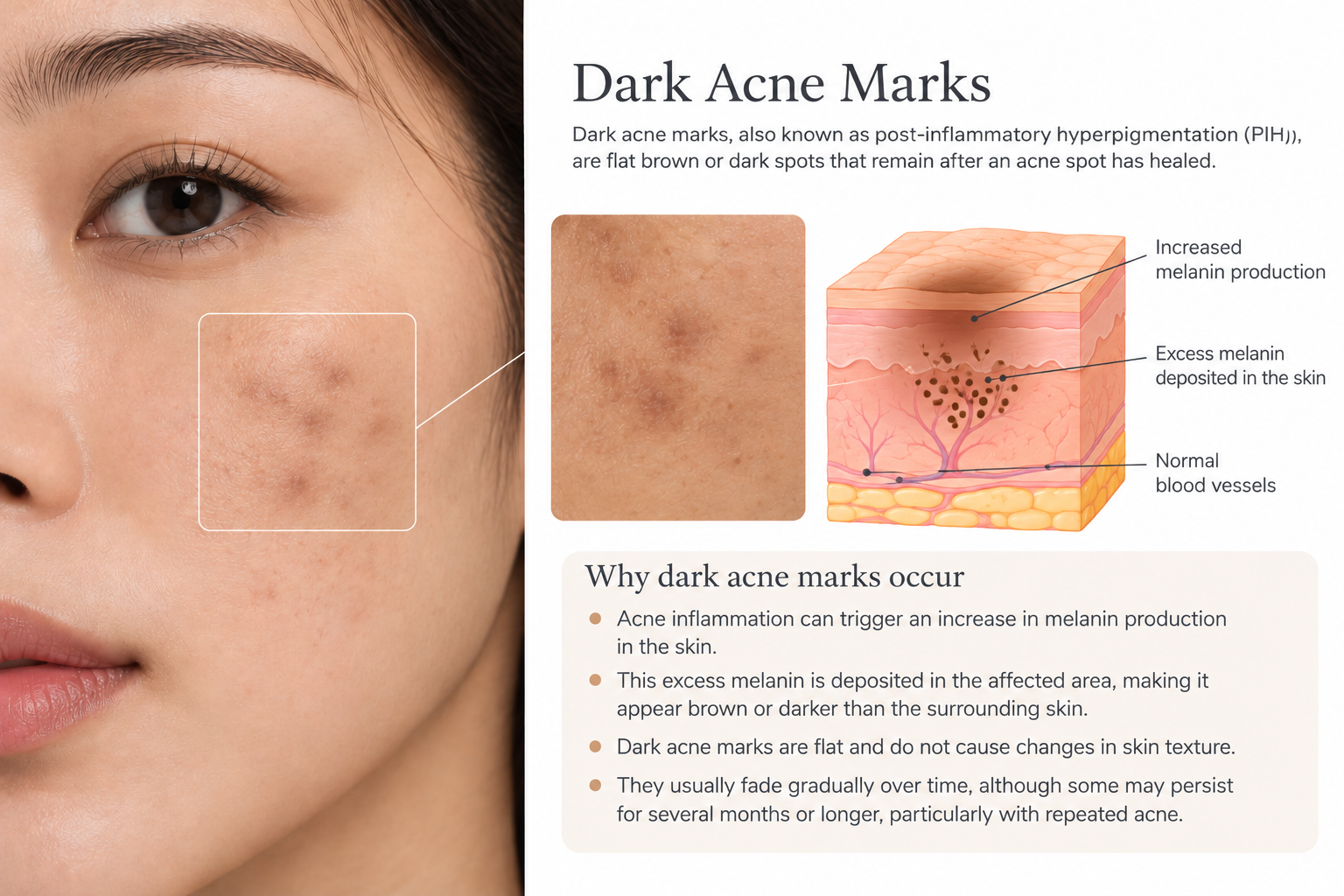
Post-inflammatory hyperpigmentation (PIH) occurs when acne-related inflammation triggers excess melanin production, leaving flat brown, dark brown or grey-brown marks after a breakout heals.
Unlike red acne marks, which are associated with blood vessel changes, PIH involves pigmentation. It is more common in individuals with medium to darker skin tones and can take several months to fade.
Dark acne marks can gradually fade over time, although deeper pigmentation often takes longer to improve. For persistent discolouration, APAX Medical & Aesthetic Clinic offers several treatment options depending on pigment depth, skin type and whether active acne is still present.
Laser treatments and chemical peels require careful selection, particularly for darker skin tones, as excessive inflammation can worsen pigmentation.
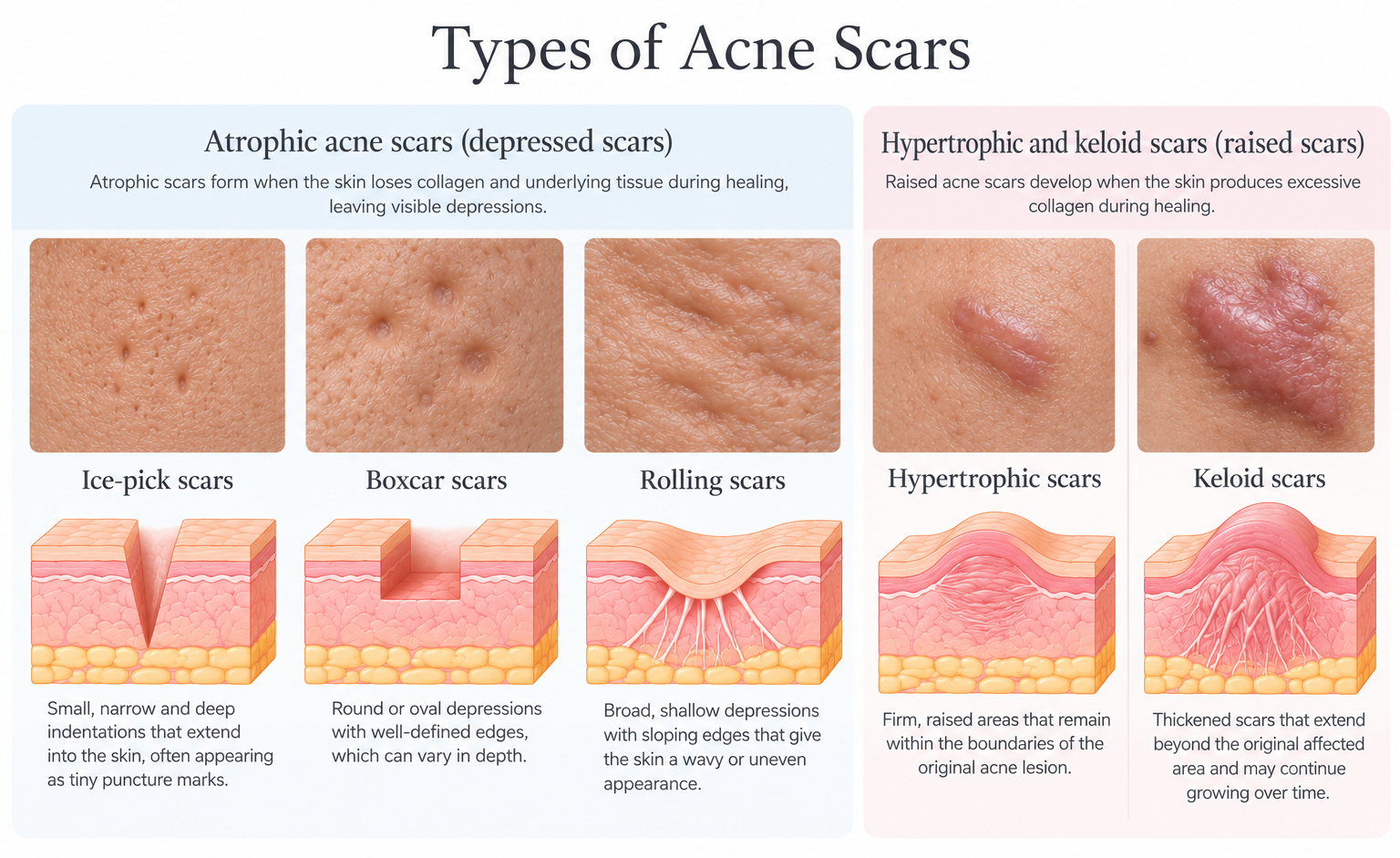
Unlike red or dark acne marks, true acne scars develop when deeper inflammation damages the skin's supporting structures. As the skin heals, insufficient or excessive collagen production can leave permanent changes in its texture.
Acne scars are generally classified into two categories: atrophic (depressed) scars and hypertrophic or keloid (raised) scars.
Atrophic scars form when the skin loses collagen and underlying tissue during healing, leaving visible depressions. There are three main types:
Raised acne scars develop when the skin produces excessive collagen during healing.
Raised scars are more commonly seen on the chest, shoulders, upper back and jawline.
Treating post-acne marks and scars starts with understanding what you're dealing with. Although red marks, dark spots and acne scars can look similar, they develop through different processes and require different treatment approaches.
A proper medical consultation helps determine whether your skin concerns are caused by post-inflammatory erythema (PIE), post-inflammatory hyperpigmentation (PIH) or structural scarring. It's also important to assess whether active acne is contributing to new marks and whether multiple concerns are present together.
Related reading: Acne Scar Removal
Red acne marks, dark spots and true acne scars may look similar, but treating them effectively starts with identifying the underlying cause. What works for pigmentation may not improve persistent redness or depressed scars, which is why a proper medical assessment is important.
At APAX Medical & Aesthetic Clinic, our doctors assess your skin condition and recommend suitable treatment options based on the type of marks or scars present. Whether you're concerned about lingering discolouration or uneven skin texture, treatment can be tailored to address your specific concerns.
Book a consultation to better understand your post-acne marks or scars and explore the treatment options available.
Most red and dark acne marks gradually fade as the skin recovers, although some can persist for months or even years. The time needed depends on the severity of inflammation, skin tone and depth of pigmentation. Unlike structural acne scars, these marks do not usually involve permanent changes to the skin's texture.
True acne scars generally do not disappear on their own because they involve structural changes to the skin. While some shallow scars become less noticeable over time, deeper indentations and raised scars usually require targeted treatment to achieve meaningful improvement.
Retinoids can help manage active acne, improve certain pigmentation changes and support skin renewal. However, topical products cannot reliably correct deep or tethered acne scars. Procedures such as subcision, TCA CROSS or fractional laser resurfacing are generally more appropriate for these structural changes.
Established acne scars do not necessarily become deeper, but natural ageing and collagen loss can make depressed scars more noticeable. Continued inflammatory acne can also lead to additional scarring, making early acne management important.
Laser treatment can be performed on darker skin tones, but careful selection of the device and treatment settings is important. Skin with higher melanin content has a greater risk of post-inflammatory hyperpigmentation following certain procedures. A doctor should assess your skin type and pigmentation history before recommending treatment.
The number of sessions depends on the scar type, severity and procedure used. Some patients notice improvement after a single treatment, while others require multiple sessions or a combination of procedures. Complete scar removal cannot be guaranteed.


Dr. Moses Ng is a distinguished professional in the field of aesthetic medicine, renowned for his expertise in advanced cosmetic procedures. With over 15 years of experience, extensive training and a keen eye for detail, Dr. Ng specializes in a wide range of treatments, including injectables, laser therapies, and acne scar management.
Dr. Moses Ng’s commitment to excellence and patient-centric approach have earned him a reputation as a trusted clinician in aesthetic medicine. His continuous pursuit of the latest advancements in the field ensures that his patients receive the highest standard of care and the most effective treatments available.


